Assemble Instruction for our Classic Cargo Bike

Read and understand these instructions before you begin the assembly. The bike comes partly assembled, and it is important to read the manual carefully before starting assembly, so the bicycle will be assembled in the correct order. It is recommended to be two people to assemble the cargo bike. Be aware that the bike must be re-tightened after some weeks of use. Make sure to check all parts of the bike and re-tighten all screws and bolts.
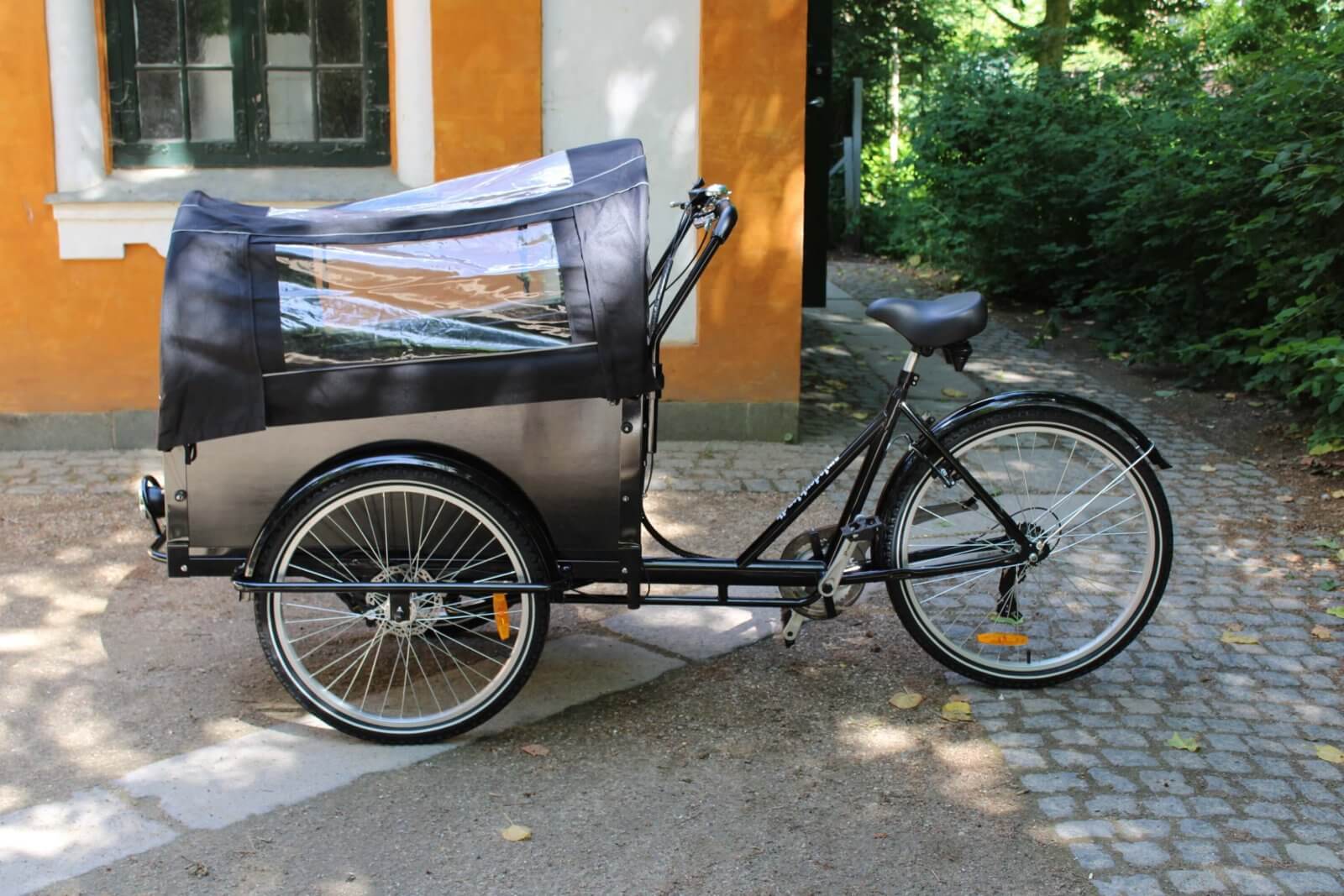
Cargo Bike Canopy

Step 1: Assembly of the back and front frame

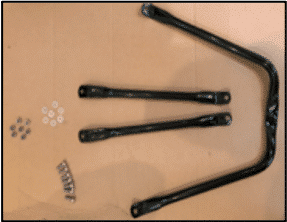
Parts you need in step 1

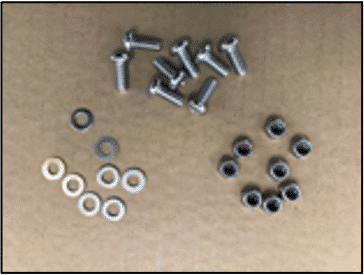
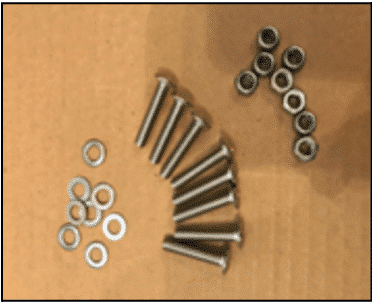
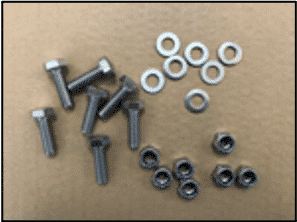
  • 7 pcs. 13 mm bolts (length: 25 mm)
  • 7 pcs. washers
  • 7 pcs. 13 mm nuts
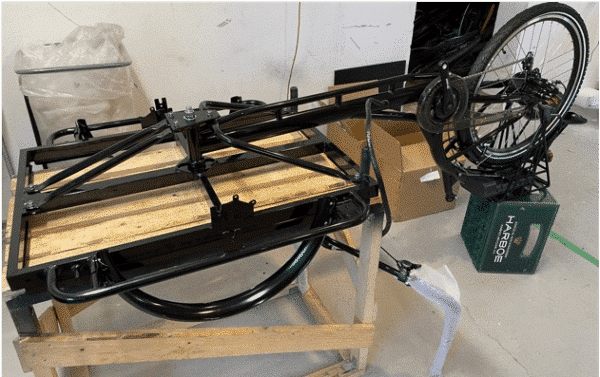
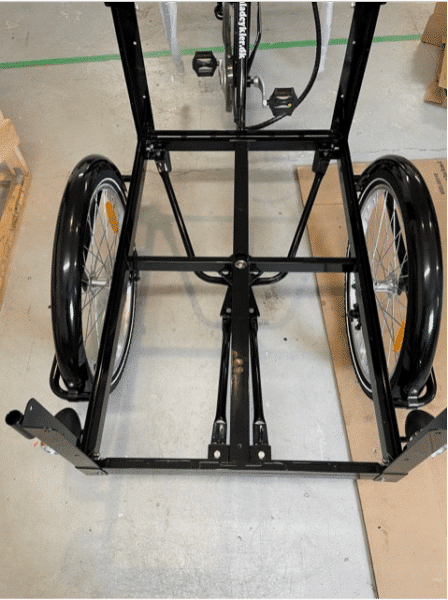
  1. When the parts have been taken out of the boxes and wrapping, place the front frame upside down on a table or two chairs.
  2. Place the back frame upside down “on top” of the front frame. Avoid taking the plastic on the luggage carrier off to avoid scratches in the paint.
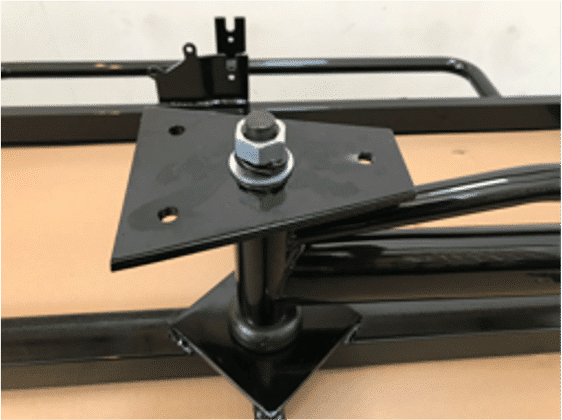
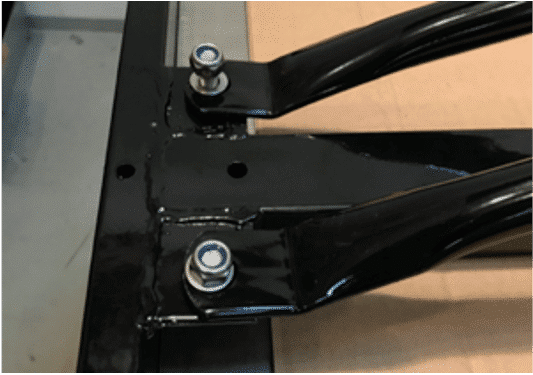
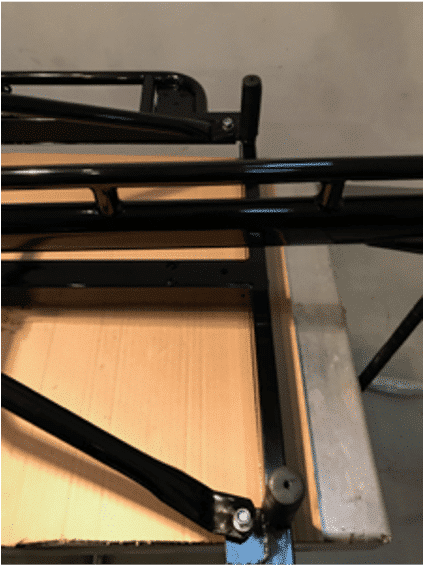
  3. The main bolt is mounted from below as shown in picture 1A, 1B, and 1C by using a hammer or something similar. It should fit tightly. The bearings should be lubricated with grease. Do not tighten the nut yet.
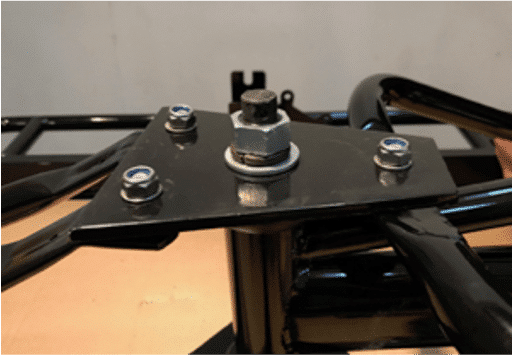
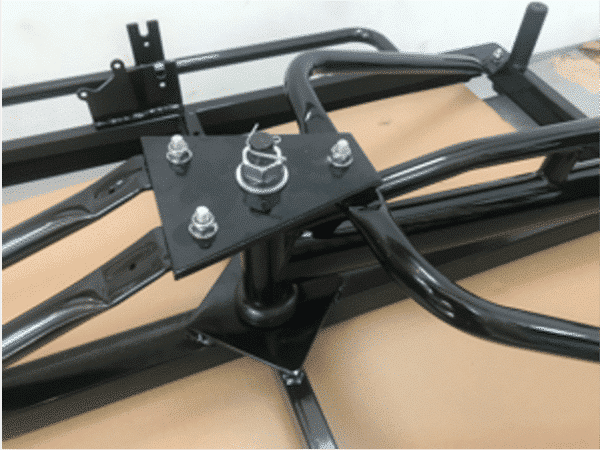
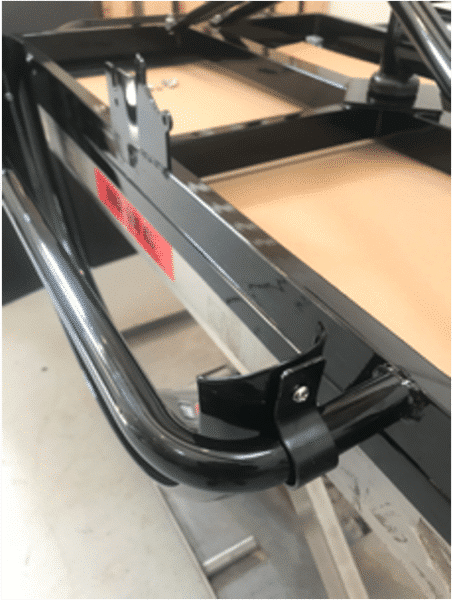
  4. With the 7 large bolts, washers and nuts mount the bow-shaped and the two straight metal rods as shown on picture 1C, 1D and 1E. The metal rods must be placed below the trazezodial plate as shown in picture 1F (It is important that all parts are assembled before tightening nuts, etc). In order to avoid that the stainless steel locknuts get stuck halfway down on the bolt, use some grease at the end of the bolts, before the nut is tightened.
  5. Only when these are tightened, tighten the large nut on the main bolt as hard as possible and insert the split (see picture 1F)

Picture 1A

Picture 1B

Picture 1C

Picture 1D

Picture 1E

Picture 1F

Step 2: Fenders, front wheels and brake pads

Parts you need in step 2

  •  8 pcs. 8 mm bolts
       (length: 12 mm)
  • 8 pcs. washers
  • 8 pcs. 8 mm nuts
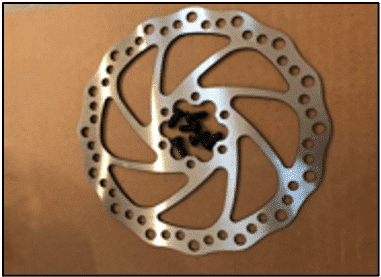
  • 2 pcs. brake discs
  • 2 x 6 small black torx bolts
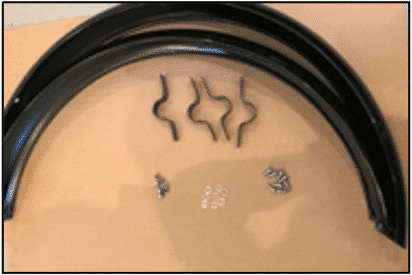
  • 2 pcs. fenders calibers
  • 2 brackets, 8 x bolts, washers and nut
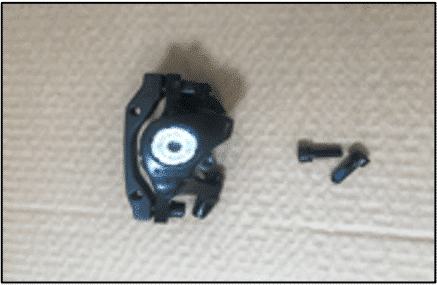
  • 2 brake calibers
  • 2×2 black allen key bolts with 2-3 ekstra washers
  1. If the bike is assembled using two chairs, one of the chairs is now moved to the end of the front frame and the second chair is removed.
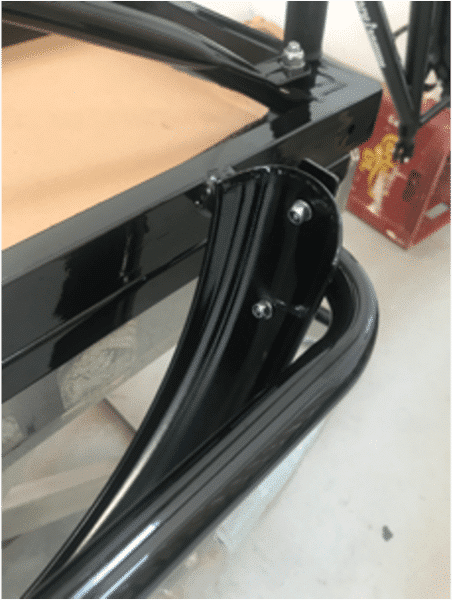
  2. The front fenders are mounted with 8 small bolts, washers and nuts + the four brackets (see picture 2A and 2B). To make sure that the fenders are just above the wheels, the nuts are tightened after the wheels are mounted.
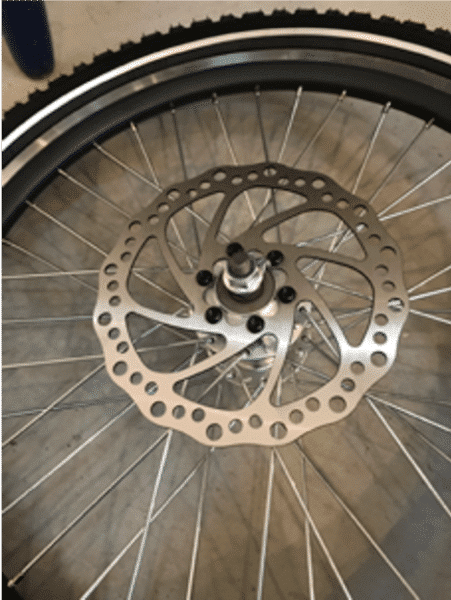
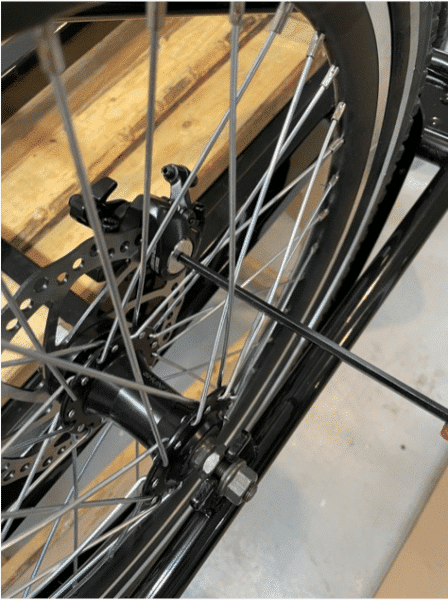
  3. The brak discs are mounted on the front wheels with the 2 x 6 small black torx bolts – see picture 2C
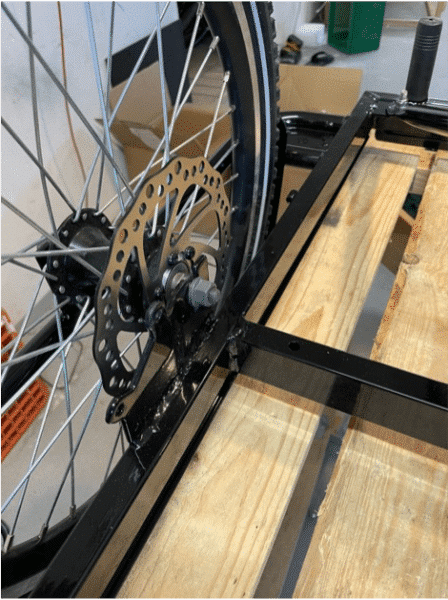
  4. Mount the front wheels as in picture 2D
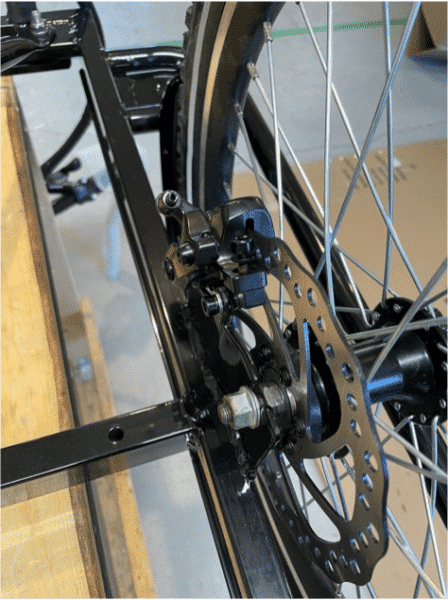
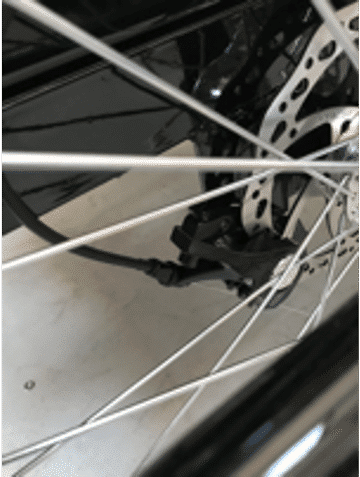
  5. The two brake calibers are mounted with the 2×2 black allen key bolts. Notice: use 2-3 extra
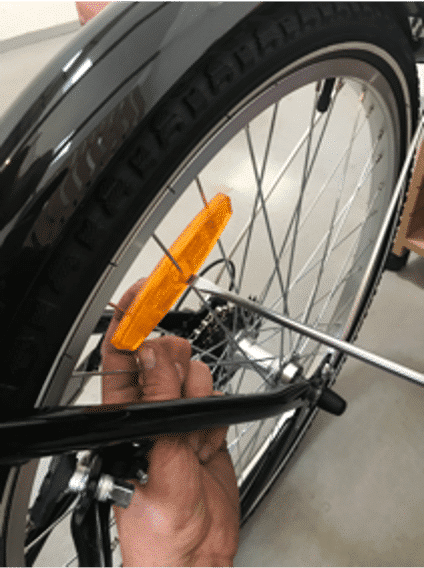
    washers per allen key bolt to ensure a good distance from the end of the bolt to the brake disc. See picture 2E.
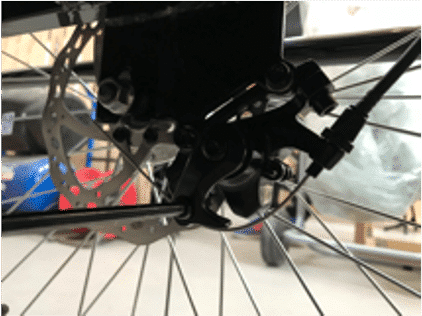
  6. The position of the brake calibers versus the brake discs are adjusted via the blank allen key-disc on the outside og the caliber and the side-by-side adjustment bolts on the brake caliber – see picture 2F and 2G
  7. The brake discs should in this way run freely without touching the brake pads when the wheel is turned. It is however OK if there is a small ”whisling” sound from the brake when the wheel is turned – this will disappear after a few days of use
  8. Then the bike is turned

Picture 2A

Picture 2B

Picture 2C

Picture 2D

Picture 2E

Picture 2F

Step 3: Assemble the box

Parts you need in step 3

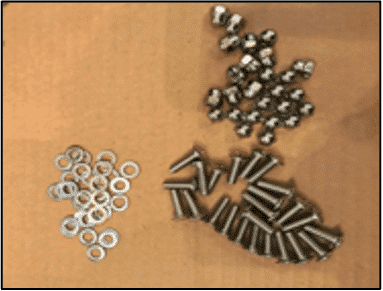
  • 8 pc. 10 mm bolts (length 30 mm)
  • 8 pc. washers
  • 8 pc. 10 mm lock nuts
  • 16 pc. 10 mm bolts (length 18 mm)
  • 16 pc. washers
  • 16 pc. 10 mm round nuts
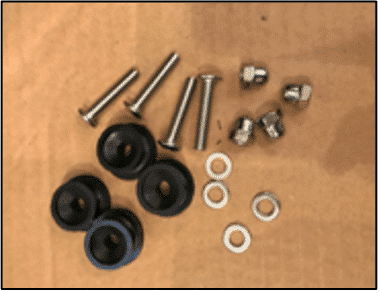
  • 4 pc. 10 mm bolts (length 30 mm)
  • 4 plastic canopy holders
  • 4 pc. washers
  • 4 pc. 10 mm round nuts
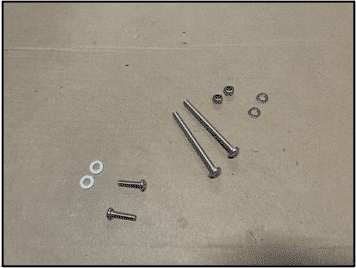
  • 2 pc. 10 mm bolts (length 70 mm)
  • 2 pc washers
  • 2 pc.. 10 mm lock nuts
  • 2 pc. small bolts
  • 2 pc. washers
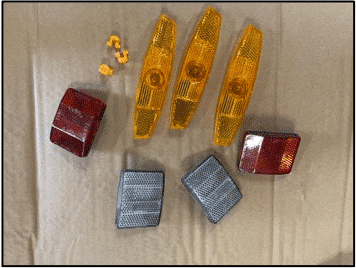
  • 2 pc. white front reflectors
  • 2 pc. red back reflectors
  • 3 pc. yellow reflectors for the wheels
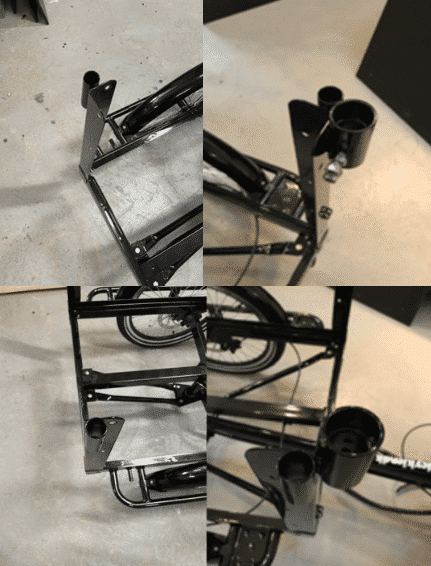
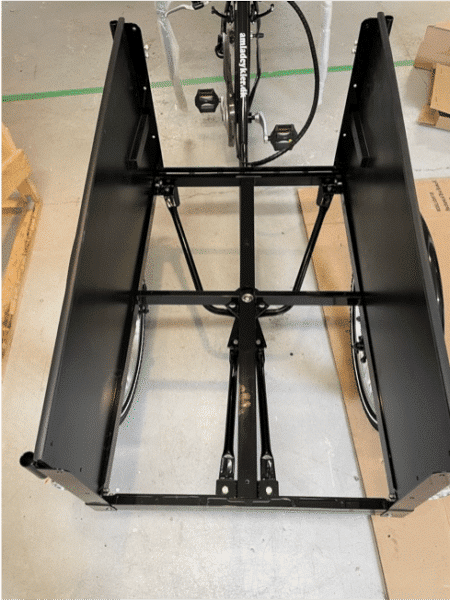
  1. The corner brackets for the box are mounted as shown in picture 3A.
  2. The correct position of the four different corner fittings is shown on picture 3B.
  3. The side panels are mounted (see picture 3C). The four canopy holders are mounted with the long bolts in the holes in the middle (see picture 3D)
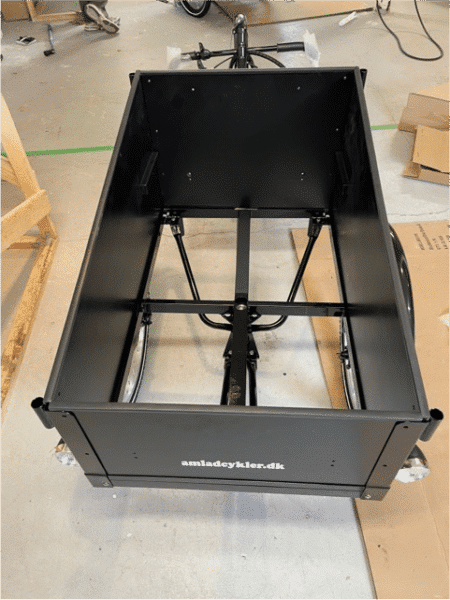
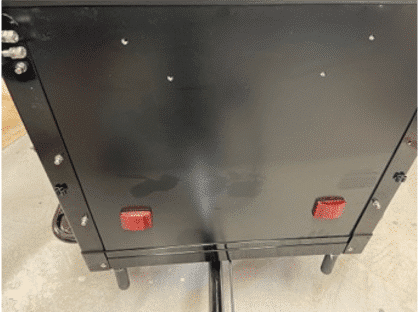
  4. The front and back panels are mounted (see picture 3E).
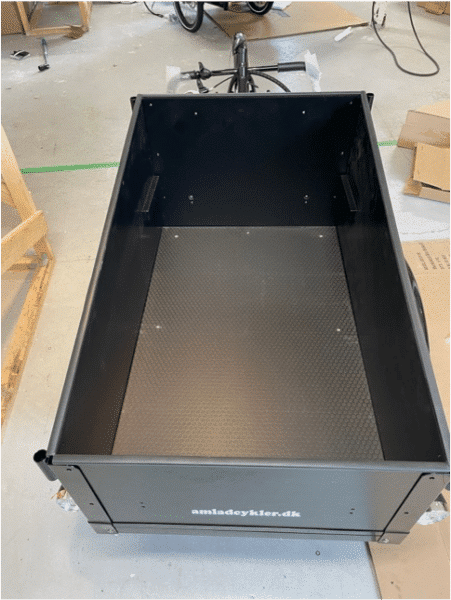
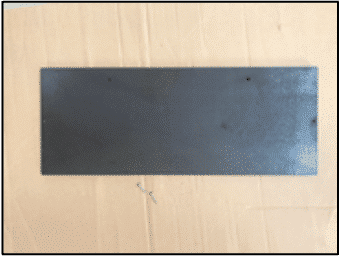
  5. The base panel is mounted using the long bolts and the nuts on the underside. The two small bolts are used in the front and back end of the base panel (see picture 3F) …and then all nuts are tightened.
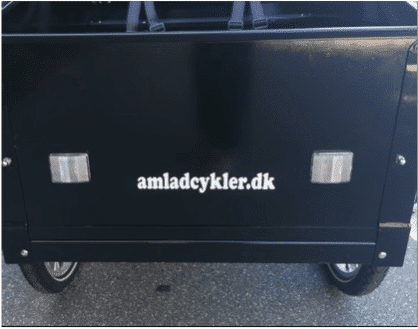
  6. The front-, back- and side-reflectors are mounted (see picture 3G and 3H)

Picture 3A

Picture 3B

Picture 3C

Picture 3D

Picture 3E

Picture 3F

Picture 3G

Picture 3H

Step 4: The rest of the equipment

Parts you need in step 4

  • 2 pc. 10 mm bolts (length 35 mm)
  • 2 pc. washers
  • 2 pc. 10 mm lock nuts
  • 4 pc. 10 mm bolts (length 18 mm)
  • 4 pc. washers
  • 4 pc. 10 mm lock nuts
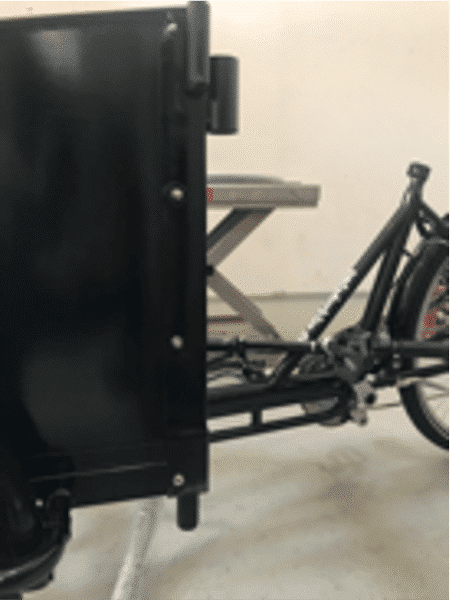
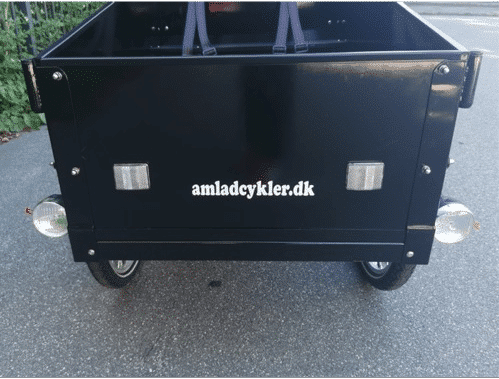
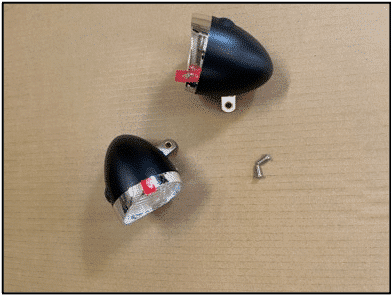
  1. The headlights are mounted on the sides of the box (see picture 4A).
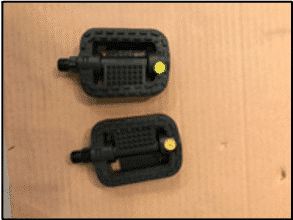
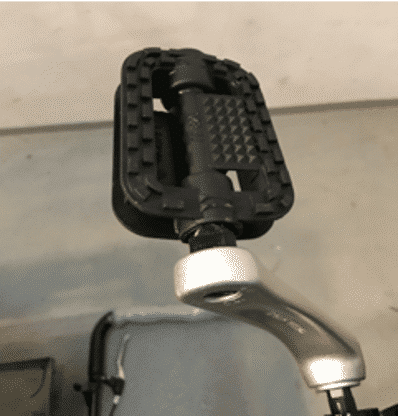
  2. The pedals are mounted (see picture 4B) – please notice that they have markings for left and right side.
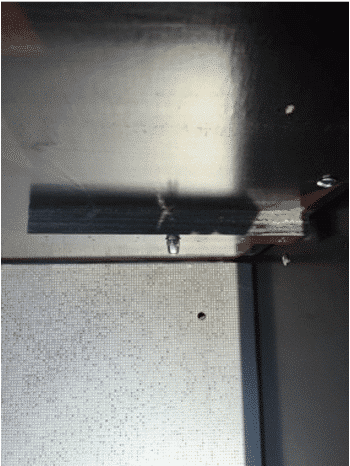
  3. The two mouldings, which keep the child seats in place are secured with the two long bolts. (see picture 4C).
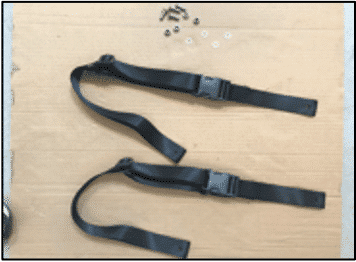
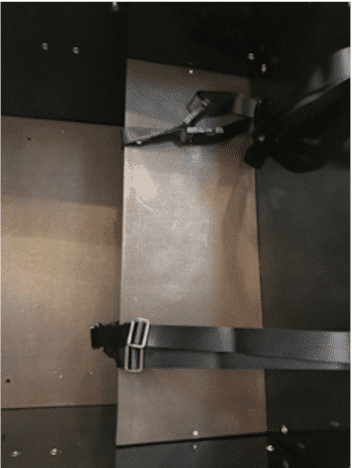
  4. The child seat is mounted with two screws (see picture 4D). The seat belts are mounted on the outside of the box (on the back panel) and below the child seat (see picture 4E).
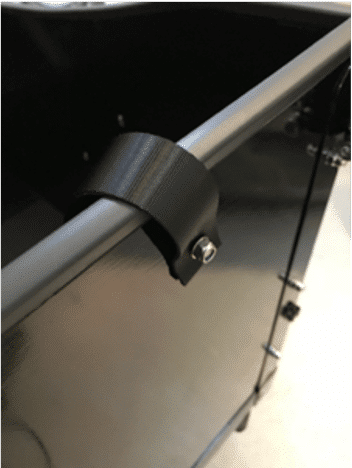
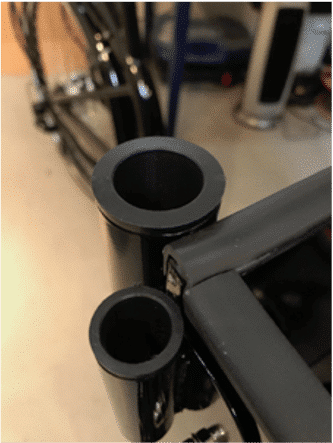
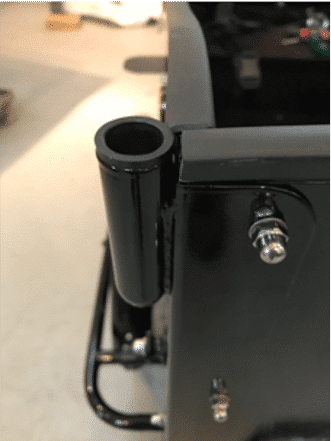
  5. The plastic fittings for the handle bar and the canopy holders are mounted using a small hammer (see picture 4F and 4G.
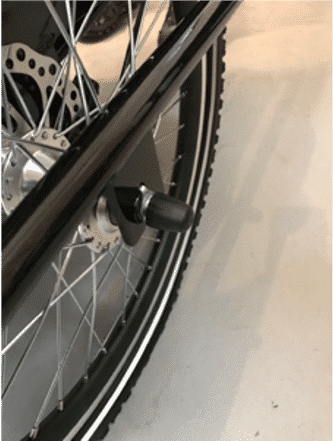
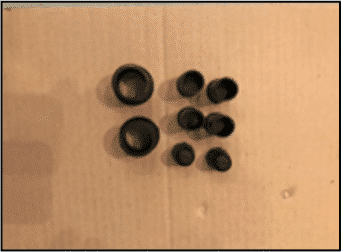
  6. The plastic fittings for the wheel nuts are mounted using a small hammer (see picture 4H)
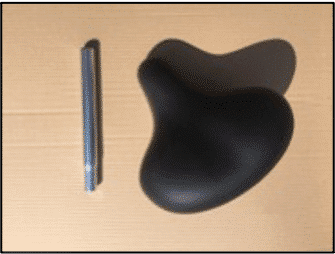
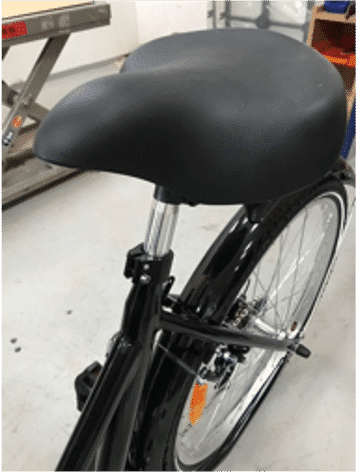
  7. The saddle is mounted on the saddle post and this is mounted on the bike (see picture 4I).
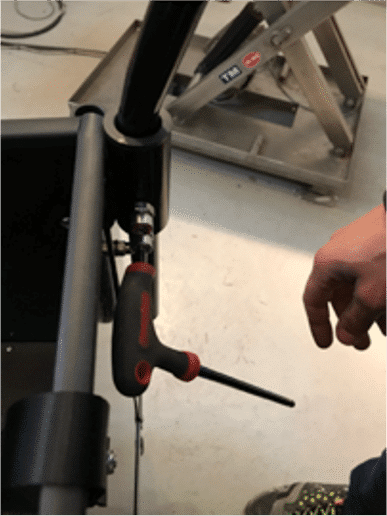
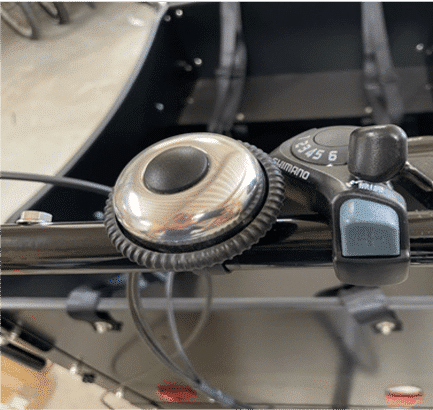
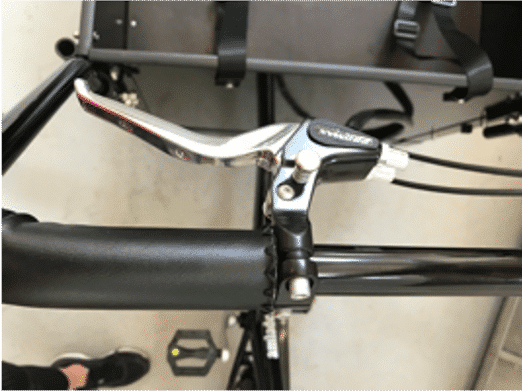
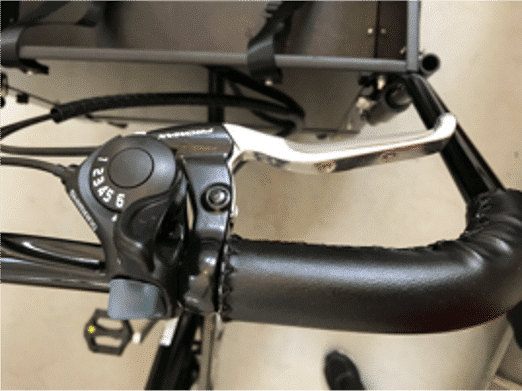
  8. The handlebar is mounted and the brake handles, gear shifter and bell are mounted on the handlebar (see picture 4J, 4K, 4L and 4M).

Picture 4A

Picture 4B

Picture 4C

Picture 4D

Picture 4E

Picture 4F

Picture 4G

Picture 4H

Picture 4I

Picture 4J

Picture 4K

Picture 4L

Picture 4M

Step 5: Brake cables and adjustment of brakes and gear

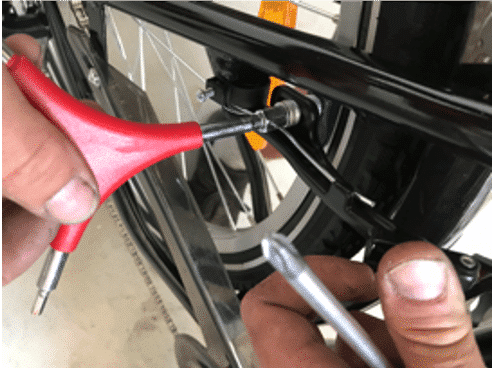
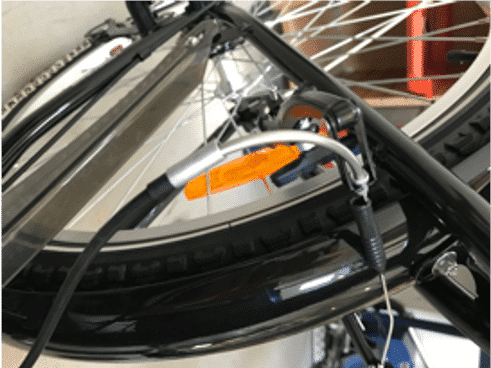
  1. The rear-brake is mounted (see picture 5A and 5B):
  2. The allen key bolt on the brake arm is loosened
  3. Make sure that the brake pads are in the right position versus the rim on both sides
  4. The screws on each side of the brake arms are adjusted so that the two arms are equally tight when pushed against the rim
  5. Give a couple of mm space to the rim on each side before the allen key bolt is tightened.
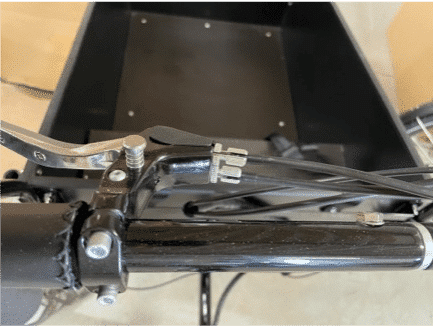
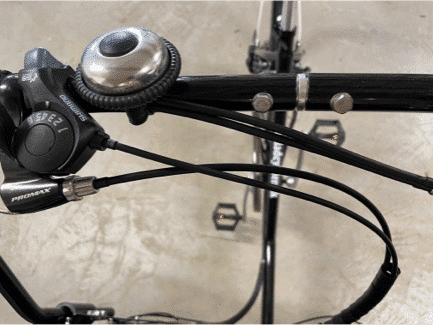
  6. The front cables are mounted in the brake handle (see picture 5C). They are pulled through the hole in the handlebar (see picture 5D) and through the cable holders (see picture 5E). The cables are mounted on the brake calibers so that the brake discs can move freely. It is however OK if there is a small ”whisling” sound from the brake when the wheel is turned – this will disappear after a few days of use.
  7. Final adjustment is done partly at the brake calibers (see picture 2F) and partly via the two small blank screws at the brake handle (see picture 5C) – until the bike brakes even and effectively.
  8. Finally the cable-holder is mounted on the back plate (see picture 5G).
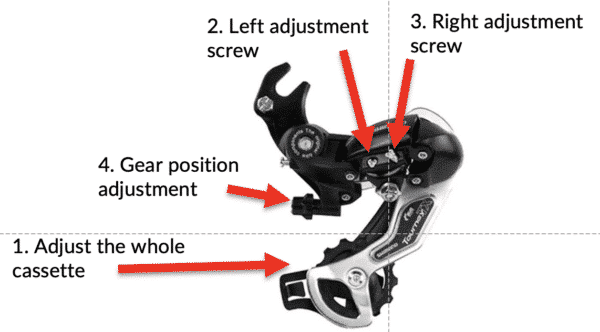
  9. The gear is tested. If the gear “clicks” or it feels difficult to change gear for some of the six levels, please use the plastic hand-screw located where the gear cable meet the gear to adjust it (see picture 5H).

Picture 5A

Picture 5B

Picture 5C

Picture 5D

Picture 5E

Picture 5F

Picture 5G

Picture 5H

IMPortant info

  • The frame number is stamped into the frame on the left side of the bike – just in front of the left pedal.
  • Remember to adjust and re-tighten all moving parts on the bike after some weeks of use. If re-tightening of the spokes are needed, please use a spoke tightener.

Enjoy your new cargo bike...!